
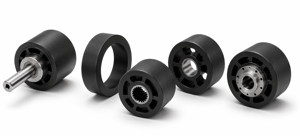
Innovative electric motor design leverages injection molded magnets to create complex, single-piece components with integrated multi-pole fields. This strategy consolidates parts, reduces weight, and enhances the precision control essential for modern compact and efficient systems.
What You'll Learn
This article explores cutting-edge design strategies for electric motors that are only possible with injection molded magnet technology. We will cover:
- How to consolidate multiple motor components into a single, complex part.
- The technique of molding multi-pole magnetic fields for enhanced precision.
- Strategies for significant weight and size reduction in motor design.
- The advantages of overmolding magnets directly onto shafts and rotors.
Why Injection Molded Magnets are Revolutionizing Motor Design
Before diving into specific strategies, it's crucial to understand what makes injection molded magnets a game-changer. Unlike traditional sintered magnets, which are brittle and limited to simple shapes, Injection Molded Magnets are composites. They are created by mixing magnetic powders (like NdFeB or Ferrite) with a polymer binder, such as nylon.
This mixture is then injection-molded, similar to plastic, allowing for the creation of intricate, high-precision components in a single step. While their magnetic strength is lower than sintered magnets, their unparalleled design freedom opens the door to revolutionary motor architectures.
Key Design Strategy 1: Complex Geometries and Part Consolidation
The Challenge: Intricate Motor Assemblies
Traditional motor designs often require assembling multiple separate components: the magnet, rotor hub, and other structural elements. This multi-part assembly adds manufacturing steps, increases potential points of failure, and can introduce tolerance stacking issues that reduce performance.
The Solution: Integrating Magnets Directly into Components
The primary innovation offered by Injection Molded Magnets is the ability to combine the magnet with structural features. Engineers can design a single component that serves as both the rotor and the magnetic field source.
Because the material can be molded into virtually any shape, you can design features like gear teeth, mounting brackets, or sensor targets directly into the magnetic component. This radically simplifies assembly, reduces the bill of materials (BOM), and creates a more robust, reliable final product.
Key Design Strategy 2: Multi-Pole Magnetization for Enhanced Precision
The Challenge: Achieving Precise Control and Sensing
Many modern applications, such as automotive sensors, micromotors, and actuators, require rotors with complex magnetic fields containing many poles arranged in a specific pattern. Achieving this with individual sintered magnet segments is difficult, expensive, and often imprecise.
The Solution: Molding Complex Magnetic Poles in a Single Step
Injection Molded Magnets solve this by enabling complex, multi-pole magnetization patterns to be designed directly into the part during the molding process. A rotor can be fabricated with dozens of alternating north and south poles in a single, monolithic piece.
This capability is ideal for:
- Brushless DC (BLDC) Motors: Creating smoother torque and lower cogging.
- Stepper Motors: Achieving higher resolution and more precise positioning.
- Sensors: Used in rotational speed and position sensors where precision is paramount.
Key Design Strategy 3: Optimizing for Weight and Miniaturization
The Challenge: Reducing Weight in EV and Micromotor Applications
In automotive, aerospace, and portable electronics, every gram counts. Weight reduction in an electric vehicle (EV) translates to extended battery range, while smaller, lighter motors enable new applications in robotics and medical devices. Sintered magnets are dense and heavy.
The Solution: Leveraging Lightweight Polymer-Bonded Magnets
The polymer binder in Injection Molded Magnets makes them significantly less dense and lighter than their sintered counterparts. This inherent lightweight property is a massive advantage for any weight-sensitive application. By using these magnets, designers can reduce the rotational inertia of the motor, leading to faster acceleration and deceleration, and improve overall system efficiency.
Key Design Strategy 4: Thin-Walled and Overmolded Designs
The Challenge: Maximizing Magnetic Field in Compact Spaces
In compact motor designs, the gap between the magnet and the stator windings (the "air gap") is critical. Securing a traditional magnet to a shaft often requires adhesives or mechanical fasteners that increase this gap and take up valuable space.
The Solution: Overmolding Magnets onto Shafts and Rotors
A powerful strategy is to overmold the Injection Molded Magnet material directly onto a metal shaft, lamination stack, or other core component. This process creates a perfect, seamless bond between the magnet and the rotor structure.
Benefits of this approach include:
- Minimal Air Gap: Tight tolerances improve magnetic flux and motor efficiency.
- Superior Durability: The magnet is mechanically locked to the shaft, eliminating the risk of it detaching at high speeds.
- Design Simplification: No need for adhesives or complex assembly procedures.
Benefits of Adopting These Strategies
By integrating these design strategies using Injection Molded Magnets, engineers can achieve a host of benefits that are out of reach for traditional magnet technologies.
- Unmatched Design Flexibility: Create complex geometries that were previously impossible.
- Cost Efficiency: Reduce assembly time and component count, especially in high-volume manufacturing.
- Exceptional Precision: Achieve tight tolerances for highly reliable and consistent performance.
- Lightweight Construction: Build lighter, more efficient motors for automotive and other weight-sensitive applications.
Choosing the Right Partner for Your Design
Successfully implementing these innovative strategies requires collaboration with a manufacturing partner who has deep expertise in both magnetics and polymer processing. Given the complexities of the global supply chain, sourcing from a dependable domestic supplier is critical for ensuring quality and compliance.
Manufacturers like Bunting Magnetics provide U.S.-based manufacturing, ensuring your components meet strict industry standards like RoHS, REACH, and ITAR. For more information on how Injection Molded Magnets can be tailored to your specific electric motor design, it is best to consult with application engineers.
Frequently Asked Questions
What are injection molded magnets?
Injection molded magnets are composite materials created by mixing magnetic powders, such as NdFeB or Ferrite, with a polymer binder like nylon. This mixture is then injection-molded, similar to plastic, allowing for the creation of intricate, high-precision components in a single step.
How do injection molded magnets help reduce parts in an electric motor?
They allow engineers to consolidate multiple components into a single part by integrating structural features directly into the magnet. For example, a single component can serve as both the rotor and the magnetic field source, with features like gear teeth or mounting brackets molded in. This radically simplifies assembly and reduces the total bill of materials.
What is overmolding in motor design?
Overmolding is a manufacturing process where the injection molded magnet material is molded directly onto a metal shaft, lamination stack, or another core component. This creates a perfect, seamless bond that minimizes the air gap for better efficiency, improves durability, and eliminates the need for adhesives or mechanical fasteners.
Are injection molded magnets magnetically stronger than sintered magnets?
No, their magnetic strength is lower than that of traditional sintered magnets. Their key advantage is not magnetic force but unparalleled design freedom, which enables the creation of complex, lightweight, and consolidated components that are not possible with brittle sintered magnets.