

In automotive environments, compression bonded magnets offer reliable magnetic performance up to their maximum operating temperature of 150°C (302°F). This thermal stability, combined with exceptional design flexibility, makes them a superior choice for a wide range of in-cabin and auxiliary motor applications.
What You'll Learn
This article breaks down everything you need to know about using compression bonded magnets in thermally demanding automotive settings. Here’s a quick overview:
- The specific temperature limits and performance characteristics of compression bonded magnets.
- How the magnet’s internal composition, particularly the resin binder, dictates its thermal behavior.
- A direct comparison of how compression bonded, sintered, and injection molded magnets perform under heat.
- The best-fit automotive applications where these magnets excel due to their unique properties.
- Why a controlled, domestic supply chain is critical for ensuring consistent thermal performance.
The Automotive Temperature Challenge
When considering using any magnet material to use for an automotive application, there are 5 basic things to consider in choosing the optimum or most suitable material:
- Size constraints in the application
- Magnetic strength of material.
- Magnet physical properties, mechanical strength, ability to withstand corrosion, as well as withstanding in some applications spin forces.
- Environment, in air, vacuum, or other under-hood applications.
- Temperature, Magnets need to withstand certain extremes in their working environment, as can be explained below:
A vehicle is a place of temperature extremes. Components under the hood can easily exceed 120°C, while interior parts can bake in the sun or freeze in a cold snap. This constant fluctuation places immense stress on every component, and magnets are no exception. Exceeding a magnet's thermal limit can lead to a temporary or even permanent loss of magnetic strength (demagnetization), causing component failure.
How Compression Bonded Magnets Respond to Temperature
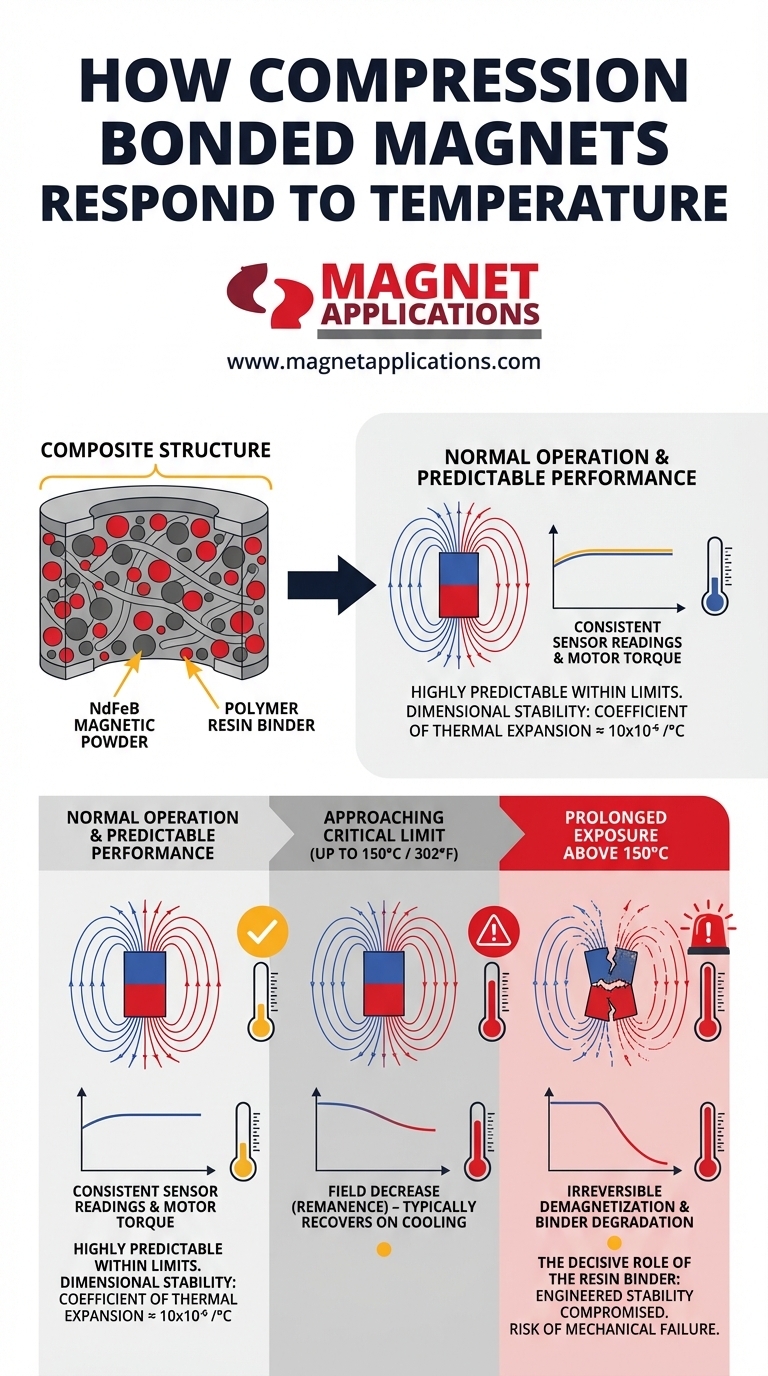
The performance of a compression bonded magnet at temperature is primarily determined by its composite structure: a mix of NdFeB magnetic powder and a polymer resin binder.
The Decisive Role of the Resin Binder
The resin used to bond the magnetic powder is the key factor in the magnet's thermal stability. For the high-quality Compression Bonded Magnets used in demanding industries, this binder is engineered to remain stable up to 150°C (302°F). As the magnet approaches this limit, its magnetic field (remanence) will decrease, but it typically recovers upon cooling. However, prolonged exposure above this temperature can cause irreversible demagnetization and degrade the binder itself.
Thermal Stability and Predictable Performance
Unlike some other magnet types that can be brittle, the composite nature of compression bonded magnets provides a degree of mechanical stability across a wide temperature range. Their performance is highly predictable within their operating limits, a critical trait for automotive engineers who rely on consistent sensor readings and motor torque. The coefficient of thermal expansion for these magnets is approximately 10x10⁻⁶ /°C, ensuring dimensional stability during thermal cycling.
Magnet Comparison in High-Heat Automotive Settings
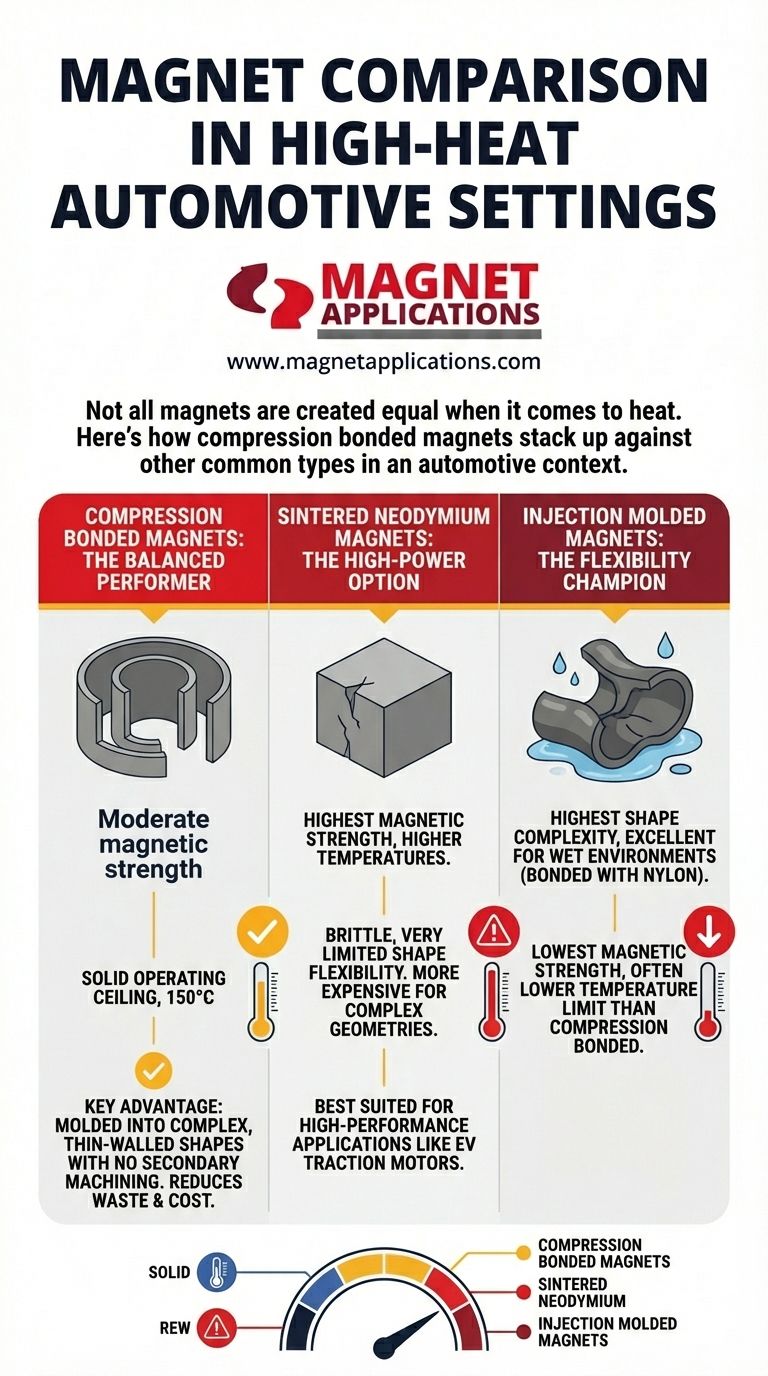
Not all magnets are created equal when it comes to heat. Here’s how compression bonded magnets stack up against other common types in an automotive context.
- Compression Bonded Magnets: The balanced performer. They offer moderate magnetic strength and a solid operating ceiling of 150°C. Their key advantage is the ability to be molded into complex, thin-walled shapes with no secondary machining, reducing waste and cost.
- Sintered Neodymium Magnets: The high-power option. They have the highest magnetic strength and can withstand higher temperatures. However, they are brittle, have very limited shape flexibility, and are more expensive to produce in complex geometries. They are best suited for high-performance applications like EV traction motors.
- Injection Molded Magnets: The flexibility champion. Bonded with nylon, they offer the highest shape complexity and are excellent for wet environments. However, they possess the lowest magnetic strength and often have a lower temperature limit than their compression bonded counterparts.
Ideal Automotive Applications for Compression Bonded Magnets
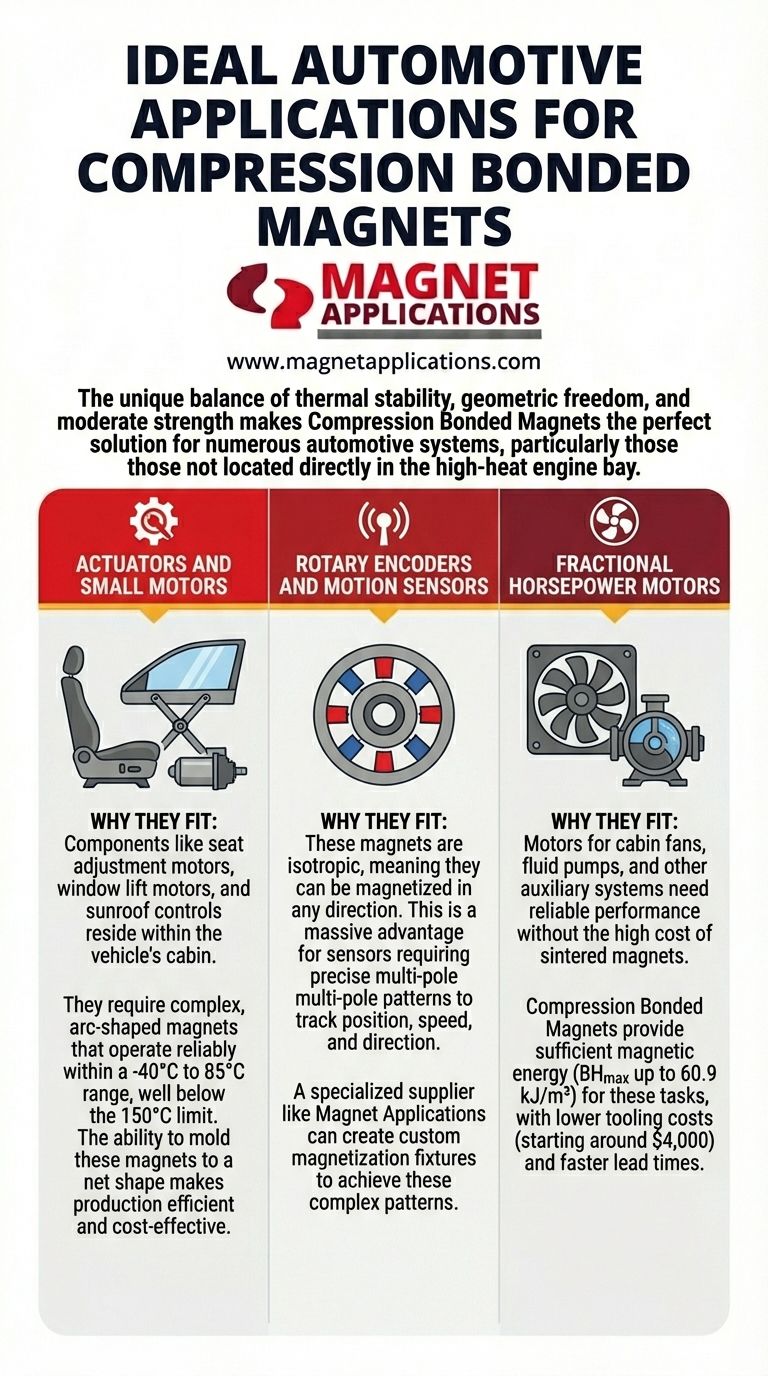
The unique balance of thermal stability, geometric freedom, and moderate strength makes Compression Bonded Magnets the perfect solution for numerous automotive systems, particularly those not located directly in the high-heat engine bay.
- Actuators and Small Motors:
- Why they fit: Components like seat adjustment motors, window lift motors, and sunroof controls reside within the vehicle's cabin. They require complex, arc-shaped magnets that operate reliably within a -40°C to 85°C range, well below the 150°C limit. The ability to mold these magnets to a net shape makes production efficient and cost-effective.
- Rotary Encoders and Motion Sensors:
- Why they fit: These magnets are isotropic, meaning they can be magnetized in any direction. This is a massive advantage for sensors requiring precise multi-pole patterns to track position, speed, and direction. A specialized supplier like Magnet Applications can create custom magnetization fixtures to achieve these complex patterns.
- Fractional Horsepower Motors:
- Why they fit: Motors for cabin fans, fluid pumps, and other auxiliary systems need reliable performance without the high cost of sintered magnets. Compression Bonded Magnets provide sufficient magnetic energy (BHmax up to 60.9 kJ/m³) for these tasks, with lower tooling costs (starting around $4,000) and faster lead times.
- Why they fit: Motors for cabin fans, fluid pumps, and other auxiliary systems need reliable performance without the high cost of sintered magnets. Compression Bonded Magnets provide sufficient magnetic energy (BHmax up to 60.9 kJ/m³) for these tasks, with lower tooling costs (starting around $4,000) and faster lead times.
The Domestic Supply Chain Advantage: Ensuring Quality and Reliability
For automotive manufacturing, consistent quality is non-negotiable. A magnet that fails due to thermal stress can disable a critical vehicle function. This is why sourcing from a reliable, vertically integrated supplier is paramount.
Magnet Applications, the only full-service U.S.-based manufacturer of compression bonded magnets, offers a zero-China, fully domestic supply chain. Their end-to-end in-house control—from powder processing and tooling to magnetization and quality assurance—ensures that every magnet performs exactly to its specified thermal and magnetic characteristics. By providing full PPAP documentation (Levels 1-3) and adhering to ISO 9001:2015 standards, they deliver the verified performance that the automotive industry demands.
Conclusion: The Smart Choice for Automotive Design
For automotive engineers designing systems outside the extreme heat of the engine bay, Compression Bonded Magnets represent the optimal blend of performance, cost, and design freedom. Their ability to operate reliably up to 150°C provides a significant safety margin for most applications, while their manufacturing process allows for the creation of intricate shapes essential for modern, compact vehicle design. Partnering with a proven domestic supplier like Magnet Applications further de-risks the supply chain and guarantees the quality needed for today's advanced vehicles.
Frequently Asked Questions
What is the maximum operating temperature for compression bonded magnets in automotive use?
Compression bonded magnets offer reliable magnetic performance up to their maximum operating temperature of 150°C (302°F). The resin binder used in their composition is engineered to remain stable up to this limit, ensuring predictable performance in demanding automotive environments.
What makes compression bonded magnets a good choice for automotive applications?
Their suitability comes from a unique balance of properties. They provide moderate magnetic strength and reliable thermal stability up to 150°C, combined with exceptional design flexibility. This allows them to be molded into complex, thin-walled shapes without secondary machining, making them a cost-effective solution for applications like seat adjustment motors, sensors, and cabin fans.
How do compression bonded magnets compare to sintered neodymium magnets for automotive use?
Compression bonded magnets are the balanced performer, offering a 150°C operating ceiling and excellent shape flexibility for complex parts. In contrast, sintered neodymium magnets have higher magnetic strength and can withstand higher temperatures, but they are brittle, have very limited shape flexibility, and are more expensive to produce in complex geometries.